

Smoothies are one of the most popular “healthy” breakfast or lunch choices out there—and also one of the most misunderstood.
Done right, a smoothie can be a genuinely powerful meal: high in protein, rich in nutrients, blood-sugar stable and satisfying enough to carry you through a busy morning without crashing by 10am.
Done wrong—and honestly, many are—a smoothie is essentially a blended dessert with just a tad of fiber. High in sugar, low in protein and virtually guaranteed to spike your blood sugar and leave you hungry an hour later.
The difference between those two outcomes isn’t complicated. It comes down to how you build it.
Here’s the Smart Mouth Nutrition framework for building a smoothie that works as hard as you do.
Why Smoothie Composition Matters
When whole fruit is blended, its fiber is partially broken down. While blending retains more fiber than juicing, the blending breakdown still accelerates how quickly natural sugars enter the bloodstream—faster than eating the same fruit whole.
The result: a quicker rise in blood glucose, a corresponding insulin response and—without adequate protein, fiber and fat to buffer it—an energy crash and rebound hunger shortly after.
The solution isn’t to avoid smoothies. It’s to build them strategically.
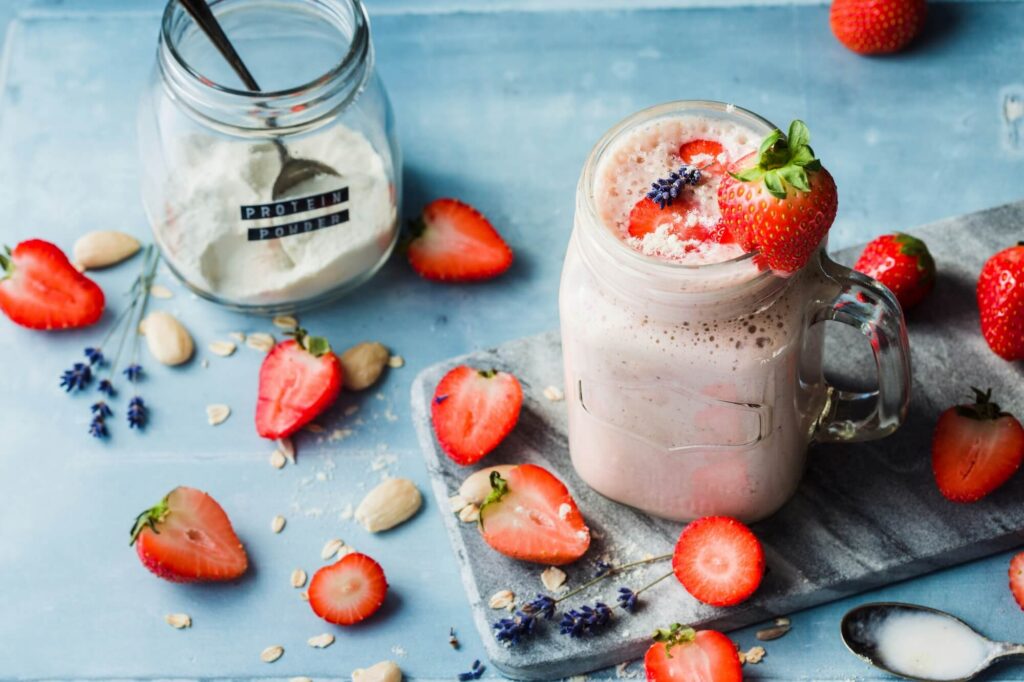
The Five Elements of a Well-Built Smoothie
1. Protein — 25 to 40 Grams
Protein is the foundation of a functional smoothie. It supports muscle health, blunts the glycemic impact of carbohydrates, promotes satiety and provides sustained energy. A smoothie without adequate protein is a high-sugar snack, not a meal.
Protein sources to consider:
- Protein powder made from whey, casein, pea, hemp or rice protein powder (look for minimal added sugar, about 20–25 grams of protein per serving)
- Plain Greek yogurt (15–20 grams of protein per cup)
- Cottage cheese (14 grams of protein per ½ cup—blends surprisingly creamy)
- Silken tofu (plant-based, neutral flavor, about 10 grams of protein per ½ cup)
2. Fiber — 5 to 10 Grams
Fiber slows glucose absorption, supports gut health (so important!) and keeps you feeling fuller longer. It’s one of the most important—and most overlooked—components of a well-built smoothie.
Fiber sources to consider:
- Spinach or other leafy greens — neutral flavor, high nutrient density
- Frozen cauliflower — adds creaminess with virtually no flavor impact (my favorite!)
- Chia seeds — provides about 10 grams of fiber per ounce, plus omega-3s
- Ground flaxseed — provides fiber, healthy fat and potential hormonal support
- Psyllium husk — seriously concentrated fiber with little effect on taste or texture
3. Healthy Fat — 10 to 20 Grams
Fat slows digestion, supports the absorption of fat-soluble vitamins (A, D, E and K), contributes significantly to satiety and—let’s be honest—makes smoothies taste good.
Healthy fat sources to consider:
- Nut butter (almond, peanut, cashew) — 1 to 2 tablespoons
- Avocado — adds monounsaturated fat and exceptional creaminess
- Full-fat coconut milk — especially good in tropical flavor smoothies
- Chia seeds or ground flaxseed — fat plus fiber plus omega-3s (double duty!)
- Hemp seeds — contribute both fat and a protein boost
4. Fruit — ½ to 1 Cup, Just Not Naked
Fruit absolutely belongs in a smoothie. It provides vitamins (especially vitamin C and potassium), antioxidants, phytonutrients and natural sweetness. The key is being intentional about how much and what kind.
Lower glycemic options: berries (all varieties), green apple, kiwi, tart cherries
Higher glycemic options: banana, mango, pineapple, medjool dates
Higher-sugar/higher glycemic fruits aren’t off limits—just keep portions modest and make sure you have enough protein and fiber in your smoothies. Either fresh or frozen fruit work great, but frozen fruit is nutritionally equivalent to fresh and helps to create a colder, better texture.
5. Liquid Base — Matters More Than You Think
This is where many smoothies quietly accumulate unnecessary sugar. Fruit juice—even 100% juice—delivers a significant sugar load without the fiber that makes whole fruit a smart choice.
Better liquid options:
- Unsweetened almond, oat, cashew, pistachio or coconut milk
- Regular dairy milk (adds protein)
- Plain kefir (adds protein and probiotics)
- Unsweetened coconut water
- Water
Start with less liquid than you think you need. You can always add more liquid in, it’s pretty hard to take too much out.
Strategic Add-Ins Worth Considering
- Creatine monohydrate — supports muscle performance and recovery, and blends perfectly in a smoothie
- Collagen peptides — flavorless, dissolves completely, adds protein and supports joints and skin
- Magnesium glycinate powder — supports sleep, muscle function and mood
- Raw cacao powder — rich in magnesium and antioxidants, and adds chocolate flavor without sugar
- Cinnamon — complements most flavor profiles and may help support blood sugar stability

A Well-Built Smoothie: What This Formula Looks Like IRL
- 1 cup unsweetened almond milk
- 1 scoop vanilla protein powder (~25g grams of protein)
- ½ cup frozen mixed berries or dark cherries
- ½ frozen banana
- 1 cup of frozen riced cauliflower or large handful spinach or kale
- 1 tablespoon almond or peanut butter
- 1 tablespoon chia seeds
- Optional: 1 tablespoon cacao powder + ¼ teaspoon cinnamon
Approximate nutrition: 35–40 grams of protein | 8–10 grams of fiber | 12–15 grams of fat
This smoothie is a meal that supports stable blood sugar, sustained energy and real satiety—without the crash that follows a poorly constructed “healthy” breakfast.
See It in Action
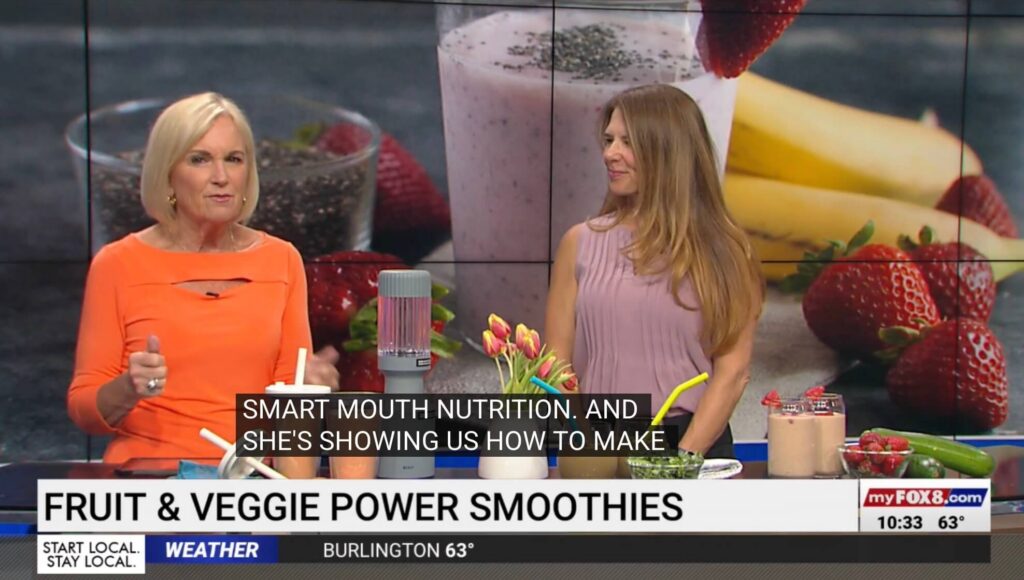
Want to watch this framework come to life? I recently shared my favorite blood-sugar-friendly smoothie strategies on WGHP Fox 8—including easy ways to boost protein, fiber, staying power without sacrificing flavor AND use up those seasonal veggies and fruits sitting in your fridge.
The Bottom Line
A smoothie can be one of the most efficient, nutrient-dense meals in your rotation—or it can be a high-sugar beverage dressed up in wellness clothing.
The difference comes down to five things: adequate protein, healthy fat, fiber, intentional fruit and a smart liquid base.
Build it like a meal. Fuel it like you mean it.
Have questions about building meals that support your energy, metabolism, and health goals? Contact me at rima@smartmouthnutrition.com or drop a comment below.





0 Comments