
Let’s Talk About the “I’ll Just Grab Coffee” Era
Every spring, something shifts.
The chill of winter dissipates, and suddenly the thinking turns to: Okay, I want to actually feel good in my body this year. More energy. Less bloating. Fewer 3 PM crashes where you’re half-asleep over your keyboard. A metabolism that feels like it’s on your side instead of quietly sabotaging you from the inside.
And yet—for some reason—we’re still doing this:
- Skipping breakfast because there’s no time, no hunger and/or no plan
- Drinking coffee on an empty stomach because of, well, the above
- Grabbing something sugary and/or carb-heavy at 10:30 AM when we’re already irritable and starting to feel hangry
But bottom line? There is a better way.
Here’s the thing… if your mornings are chaotic, under-fueled or sending your blood sugar on a theme park ride before 9 AM—your nervous system is already stressed before it even really starts. Your body isn’t working against you on purpose. It’s just doing its best with what it’s been given.
And what it’s been given… might be nothing but a hot (or iced) cup of joe and good intentions.
Instead this post is your gentle, science-backed nudge to change that. No elaborate recipes. No meal prep that takes three hours on a Sunday. (But more power to you if you’re doing that!) Just real-food, real-life breakfasts that your body—and your nervous system—will thank you for.

Why Breakfast Matters More Than You Think (Especially in Midlife)
Let’s get something straight first—this isn’t about forcing yourself to eat if you’re truly not hungry. It’s about understanding what’s actually happening in your body after 10-12 hours without food—and making an informed choice from there.
Overnight, your body is doing a lot of important, unsexy work, like:
- Drawing on stored glucose to keep your blood sugar stable while you sleep
- Running repair and recovery processes (the behind-the-scenes stuff that keeps you functional)
- Naturally raising cortisol in the early morning hours, which is completely normal and actually helpful for getting you up and moving
And that overnight fast? It matters. We’re not here to shorten it or skip it. And your body needs it. But here’s the part most people miss: You wake up already in a mild stress state. Your cortisol is elevated. Your glycogen stores are lower. Your body is in a kind of metabolic “hurry up and wait” mode, asking: Are we eating? Are we running from something? What’s the plan here, people?
If you don’t eat—or if your only input is caffeine—you stack stress on top of stress:
- Cortisol rises even higher
- Blood sugar becomes more variable
- Your body has to work harder to maintain stability, which costs energy you don’t have (or want) to spare
The result? You may recognize these feelings:
- “Wired but tired”—alert but not actually restored
- A mid-morning crash that hits like a wall
- Irritability that you’re blaming on other people, but is actually just your blood sugar
- Afternoon cravings so intense they feel like a personal attack
Eating a balanced breakfast helps your body:
- Replenish glycogen after the overnight fast
- Bring that excessive cortisol response back down to earth
- Set a more stable blood sugar rhythm for the rest of the day
Translation (and this is pure gold, I promise):
Breakfast isn’t just a meal. It’s a metabolic tone-setter.
How you nourish yourself (or don’t) in the morning shapes how the rest of your day unfolds—your energy, your hunger, your mood, your cravings. All. Of. It.
The Blood Sugar Piece (This Is Where Everything Starts to Click)
Think of your first meal as the opening move in a long game of chess. The next moves are based on that opening one, because your body tends to follow the pattern you establish early.
If breakfast is high sugar, low protein or nonexistent, you’re more likely to experience:
- Bigger glucose spikes
- Sharper drops that leave you feeling foggy and hungry
- More reactive hunger throughout the day
- Cravings that feel urgent and non-negotiable by afternoon
And this isn’t just a theory. The research backs it up:
- Higher-protein breakfasts (think: around 25-30 grams of protein) have been shown to improve satiety and meaningfully reduce evening snacking (and that amount of protein helps turn on muscle synthesis)
- Balanced breakfasts help improve glycemic control and energy stability across the full day
But here’s the real-life versions most of us actually live (right now, anyway):
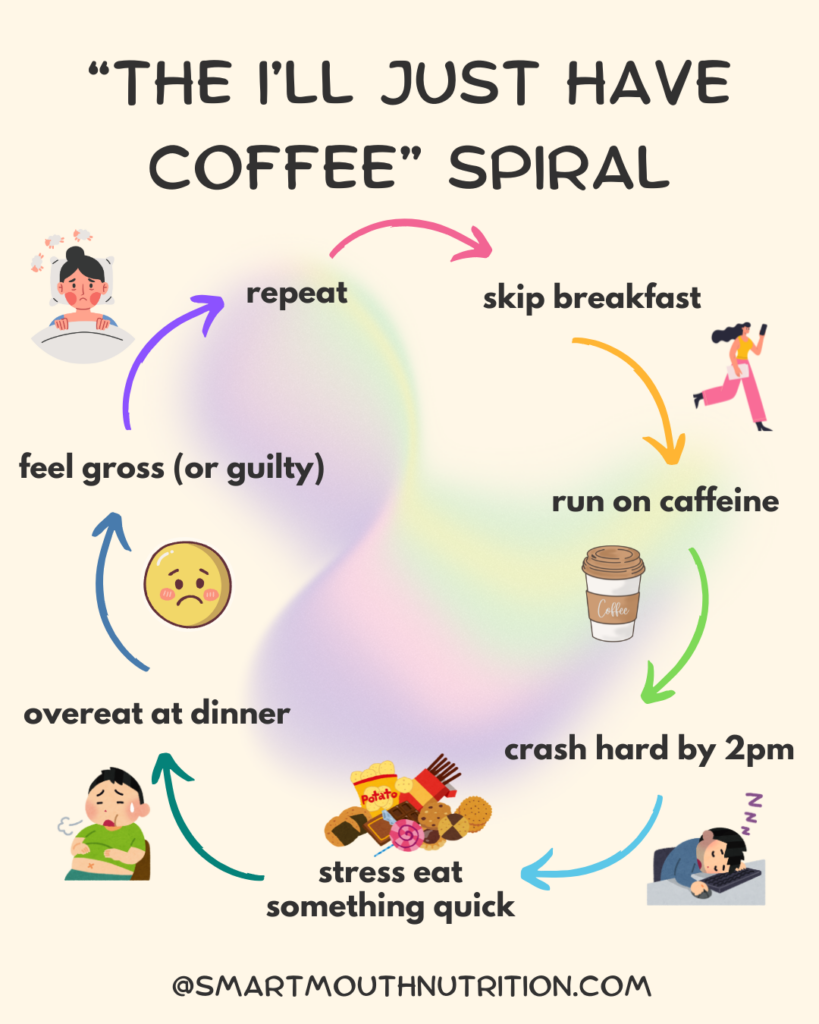
But what if this was our reality?
The Balanced Breakfast Alternative
Eat something nourishing → Steadier energy all morning → Fewer cravings → More capacity to make good choices (including food choices) without white-knuckling it
That second path doesn’t require perfection. It just requires a little intention—and usually less than 5 minutes. Yes, a little planning and simple prep. That’s it.
What Makes a Breakfast “Nervous System-Friendly”?
We’re not chasing gold-star perfect here. We’re building predictability, stability and what your nervous system reads as a safety signal. And your nervous system? It loves a safety signal. Think of it this way… your nervous system is constantly scanning the environment asking, “Are we okay? Do we have what we need? Can we relax and function well—or should we brace for impact?”
When your blood sugar is swinging and your cortisol is running the show, the answer is… Brace for impact. When you eat consistently and well? The answer becomes… We’re good. Let’s get things done!

Here’s your simple framework for a nervous system-friendly breakfast:
Protein (The Anchor — 20–30g ideally)
Protein is the MVP of breakfast. It stabilizes blood sugar, keeps you full in a way that actually lasts and, in midlife, it becomes especially critical for maintaining muscle mass. (Yes, even if you’re not trying to “bulk.” Muscle is metabolic gold—it helps your body burn energy more efficiently, supports bone health and keeps you functioning optimally as you age.)
Aim for 20–30 grams at breakfast. More than you think you need. Definitely more than what’s in that granola bar.
Fiber (The Underestimated Overachiever)
Fiber slows down glucose absorption—meaning less spike, less crash, more steady energy. It also feeds your gut microbiome (which is a hell yes!), which is in constant conversation with your nervous system via the gut-brain axis. A happy gut genuinely contributes to a more regulated nervous system. Feed it accordingly.
Aim for about 25-35 grams per day. And eat a variety of fiber sources for a diverse microbiome.
Healthy Fat (The Satisfaction Factor)
Fat is what takes a meal from “I guess I ate” to “I’m actually satisfied and not thinking about food for three hours.” It slows digestion, supports hormone health (especially important in perimenopause and menopause) and—let’s be honest—makes food taste good. Don’t fear it. Use it.
Consistency (The Secret Weapon)
Eating within about 1–2 hours of waking. Not swinging between “nothing until noon” and “entire box of cereal.” Not treating weekdays and weekends like different metabolic realities.
Consistency is what moves you from reactive eating to regulated eating. And regulated eating is where the good stuff happens—steadier energy, fewer cravings, a body that starts to trust you again. And, that’s when the magic starts to happen.
“But Mornings Are Chaos” (Valid. Let’s Work With That.)
You’re packing lunches, answering texts, looking for someone’s other sock and trying to drink water before you’ve even fully woken up. I get it. (I’ve been there. Still there many mornings!) The goal isn’t a Pinterest breakfast with artfully arranged fruit. The goal is… I ate something that actually supports my body before 10 AM.
That’s it. That’s the bar (pun intended). And the breakfasts below all clear it comfortably.
Nervous System-Friendly Breakfast Ideas (Real-Life Edition)
The 3-Minute Protein Bowl
For when you want something that feels like breakfast but requires zero cooking
Layer up: Greek yogurt or skyr (it’s okay to go full-fat, 2% or skim, whatever you enjoy most) + a handful of berries + a sprinkle of chia seeds and/or ground flax + a small handful of nuts or a low-sugar granola for crunch. If you’re not hitting your protein target with yogurt alone, stir in a scoop of protein powder before adding the toppings. (I do this and vanilla protein powder makes it taste a little sweeter for a win-win.)
Skyr is a quiet hero here—it’s Icelandic, it’s thick, it’s creamy, and it clocks in around 17g of protein per serving before you add anything else. Seek it out.
Protein estimate: 20–30 grams depending on yogurt choice + protein powder

Upgraded Toast
For the person who just needs something familiar, elevated
Sourdough or whole grain toast is your base—not because carbs are bad (they’re not), but because these options digest more slowly and give you more fiber than standard white bread.
Top it with smashed avocado + one or two eggs (or one egg + 1-2 egg whites) any style + smoked salmon + hemp seeds or pumpkin seeds + a generous shake of Everything But the Bagel seasoning. This is the breakfast that looks impressive but takes maybe 7 minutes, and it’ll carry you to lunch without a single vending machine detour.
Protein estimate: 20–30 grams with eggs (depending on number of eggs) and salmon

The Smoothie That Doesn’t Crash You
For the person who eats breakfast while driving or standing over the sink
There are two kinds of smoothies: the ones that leave your starving 45 minutes later (we see you, fruit plus juice plus vibes) AND the ones that actually do the trick. The difference is almost always protein and fat and whether there’s enough of either or both in your smoothie.
For real staying power (and muscle-building), build yours like this: protein powder + frozen berries or dark cherries for antioxidants and flavor + a big handful of frozen spinach or kale + a tablespoon of nut butter + a tablespoon or chia or flax seeds + milk of choice and/or kefir to blend.
Wildcard additions that sound weird but work (and totally up the fiber!): frozen riced cauliflower add creaminess and bulk with basically no flavor. Frozen zucchini chunks do the same thing. Try it once before your judge it. (You won’t taste either of them, I promise!)
If your smoothie is leaving you hungry in an hour, it’s not balanced—add more protein or fat.
Protein estimate: 25-35 grams

Microwave Veggie Egg Mug (2 Minutes, No Excuses)
For the person who says they don’t have time to cook breakfast
Crack 2 eggs into a microwave-safe bowl + a splash of milk + a small handful of chopped veggies (pre-chopped peppers, spinach, leftover broccoli or mushrooms) + a sprinkle of cheese (if you want). Season it. Microwave on high for 60 seconds, then stir and microwave another 30-60 seconds until just set.
That’s it. Two minutes. Warm, protein-rich, done.
This is the breakfast for the mornings when you’re convinced you have no time and no options. Spoiler alert: you had time. You just needed a plan.
Protein estimate: 14-18 grams (add a side of Greek yogurt or chicken sausage to boot)

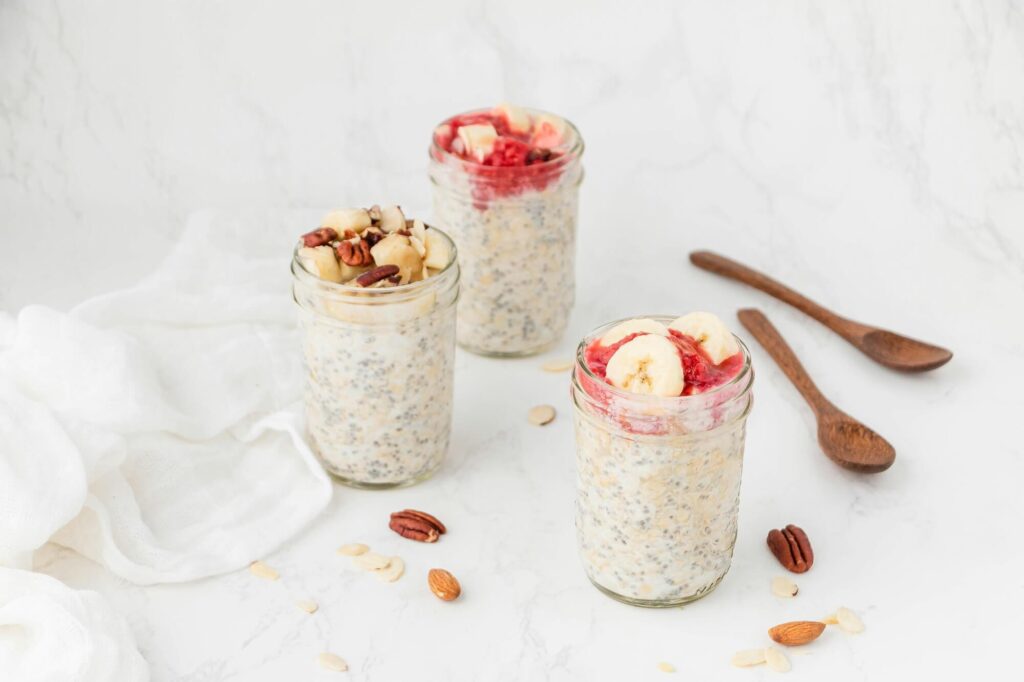
Overnight Protein Oats
For the person who wants to feel like they have their life together—and they do
Make it the night before (or make four jars on Sunday and feel genuinely smug about it all week): 1/2 cup rolled oats + 3/4 cup milk of choice + 1 tablespoon chia seeds + 1/2 to 1 scoop protein powder + handful of berries. Stir, cover, refrigerate overnight.
In the morning, grab it out of the fridge, give it a stir and eat it cold or microwave it for 90 seconds. Top with nut butter or a few nuts for healthy fat.
What makes this great: it’s balanced, portable, requires zero morning brain and because oats have beta-glucan (a soluble fiber), it actually has solid research behind its ability to support stable blood sugar and cholesterol levels. Smart breakfast.
Protein estimate: 20-30 grams depending on protein powder + yogurt additions
Leftover (The Most Underrated Strategy in the History of Breakfast)
For the person willing to think outside the breakfast box (or who doesn’t really like breakfast foods)
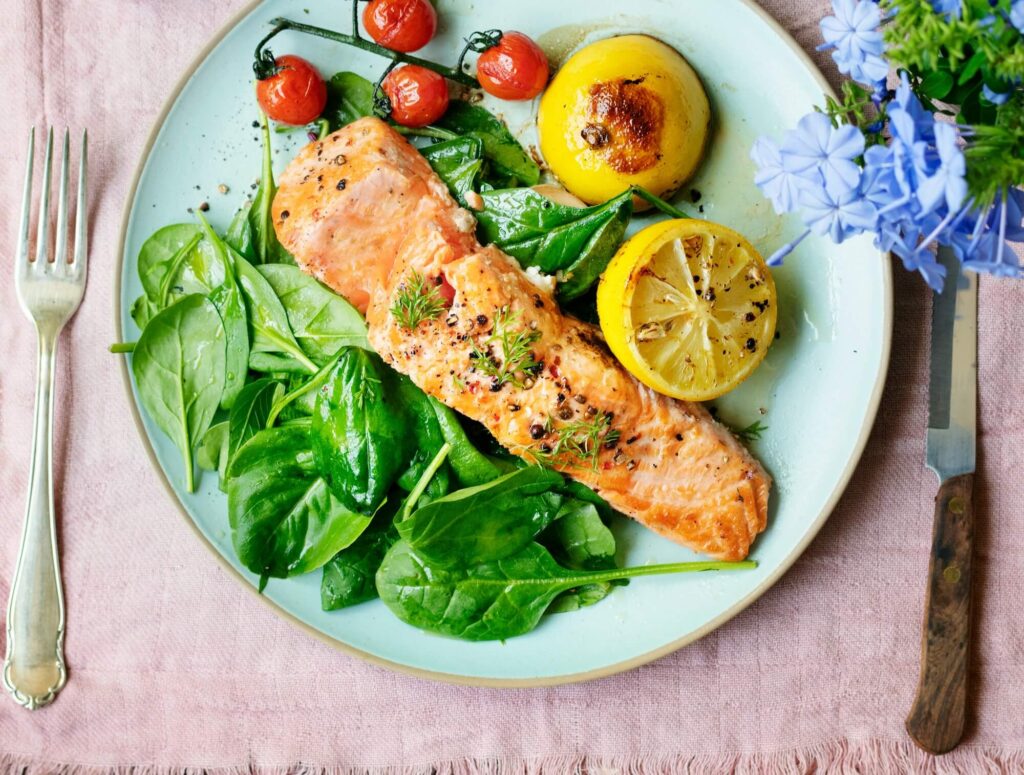
Your metabolism does not care what time of day the food was originally intended for. Leftover grilled chicken with roasted veggies? Breakfast. Rice, a fried egg and half an avocado? Breakfast. Salmon with sweet potato or other veggies? Absolutely breakfast.
Savory breakfasts are actually more common than sweet ones in most parts of the world, and they tend to be naturally higher in protein and lower in sugar. If you’re someone who never feels satisfied by traditional breakfast foods, this might be your answer. Eat the leftovers. Refuse to feel weird about it. Your energy levels will thank you.
Protein estimate: Varies, but probably 25-40 grams if there’s a solid protein source
The Snack Plate Breakfast
For the person eating breakfast in stolen moments between tasks
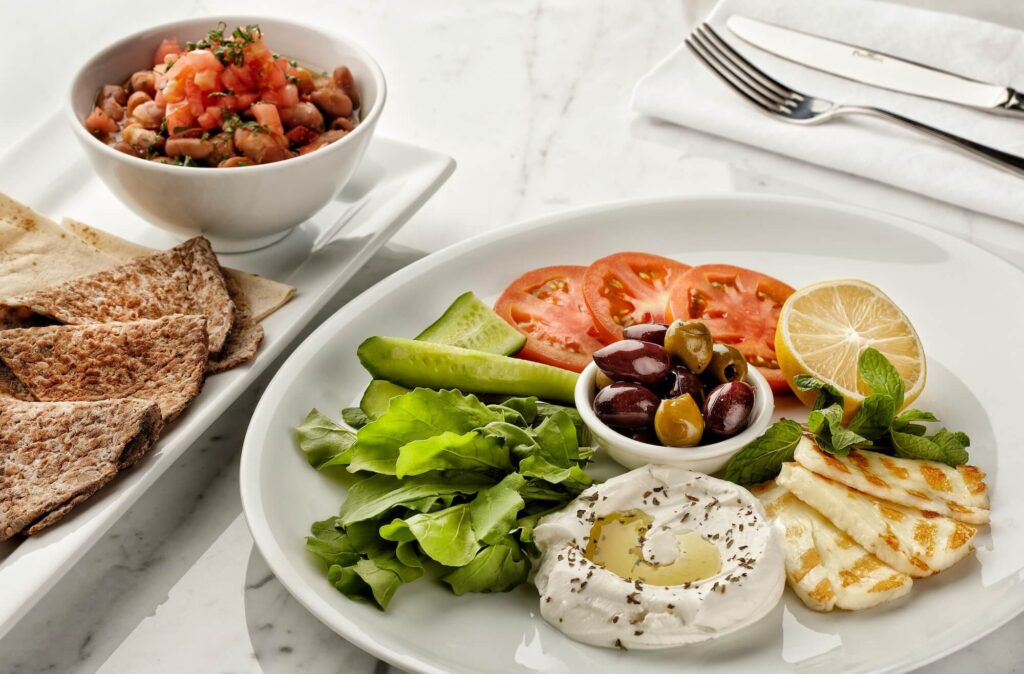
No plate needed. No real assembly required. Just a collection of good things: cottage cheese or a small serving of cheese + a hard-boiled egg (make a batch at the start of the week) + a piece of fruit or berries + a small handful of nuts + some seed crackers or sourdough toast slice.
This is the breakfast you eat while packing lunches, supervising last-minute homework or responding to the 47 Slack messages that arrived overnight. It counts. It’s balanced. It works.
Protein estimate: 20-28 grams depending on portions and foods
Small Shifts That Change Everything
Hopefully, these ideas show you that you don’t need an overhaul. You just need a starting point, with a little prep work and/or planning.
Here’s a simple framework to begin:
- Eat something within 1-2 hours of waking—not to disrupt your overnight fast, but to give your body the signal that nourishment is coming
- Pair fiber-rich carbs with protein—aim for around 30 grams of protein and 5-8 grams fiber at breakfast to meet needs, generally speaking
- Stop treating coffee as a meal plan—it can be part of your morning, just not the whole plan
- Pick 2-3 breakfast you actually like and rotate them—decision fatigue is real, and having a small go-to rotation removes the “what am I going to eat” friction entirely
If you want an easy-to-reference grocery shopping list and with 20 foods to support your metabolism and nervous system, click here.
The Nervous System Piece (This Is the Missing Link)
Here’s what most nutrition content doesn’t talk about—yet it’s the piece that ties everything together.
Your body is always running a background assessment: Am I safe enough to use energy freely? Or should I conserve it just in case? When you skip meals, eat inconsistently or chronically under-fuel, your body get s a very specific message—resources are scarce, hold on tight.
So it leans toward conservation—lower energy output, slower metabolism, more reactive stress response. Bottom line: It’s not putting all of its eggs in one energy bucket, like metabolism, because it’s not sure if it’s safe to… resources may be needed elsewhere.
However, when you eat consistently, stabilize your blood sugar and support your system early in the day, the message shifts—okay, folks, we have what we need, we can function well and we can use energy, build muscle, regulate mood and handle whatever today brings.
This is why metabolic health isn’t built through restriction—it’s built through regulation.
Your body doesn’t need to be more controlled. It needs to be supported. And breakfast—a real, balanced, consistent morning meal—is one of the simplest ways to start sending that signal.
This Doesn’t Have to Be Complicated
You don’t need perfect mornings every day. Oh and by the way, nobody has those. (At least, no one I know.)
You do need:
- A little structure
- A little nourishment
- A little consistency
- And maybe the willingness to try a frozen zucchini or riced cauliflower smoothie at least once before you write it off.
Pick one breakfast from this list. Make it this week.
There, that’s the whole assignment. Because the goal was never to eat less or to be more disciplined or to suffer through eating something that doesn’t taste good.
The goal is to give your body what it genuinely needs—consistently enough—that it can finally work with you instead of against you.
And, this week, that starts with breakfast.
Ready to stop guessing and start actually supporting your metabolism in a way that fits your real, full, busy life? This is exactly the kind of work we do inside my Metabolic Reset programs—connecting nervous system health, nutrition strategy and sustainable habits that actually stick (without the guilt, rigidity or the 5 AM smoothie that you hate). To learn more about my Metabolic Reset programs, click here.





Love this! Thank you!
Thank you, Sarah! Hope you enjoy! 🙂