
You know you should drink more water. You hear it all the time. And yet, most of us are walking around meaningfully under-hydrated—not dramatically, not dangerously (most of the time) but chronically just below the level where our bodies thrive.
That gap between “okay” and “optimal” hydration is where energy is lost, performance drops, skin loses its glow, metabolism slows and the mind gets foggy. And in the summer, that gap widens significantly.
In this post, we dive into the science of hydration: what staying hydrated actually does for the body, why it matters differently depending on your life stage, how to know if you’re truly hydrated and the practical strategies that go beyond “drink eight glasses a day.”
Why Hydration Is About More Than Just Drinking Water
Water isn’t just about thirst—it’s involved in nearly every physiological process your body runs.
These are just some of those processes:
- Cellular function—every cell in your body requires water to function. Nutrients enter cells, waste exits and chemical reactions occur in aqueous environments.
- Temperature regulation—sweating is your body’s primary cooling system. Without enough water, this system is compromised, which is why heat-related illness becomes much more dangerous when you’re dehydrated.
- Cardiovascular function—blood is roughly 90% water. Dehydration reduces blood volume, making the heart work harder to deliver oxygen and nutrients throughout the body.
- Kidney function—your kidneys filter waste products from blood, a process that requires substantial water. Chronic dehydration strains the kidneys and increases risk of kidney stones.
- Digestion & gut motility—water is required to break down food, absorb nutrients and move waste through the intestines. Insufficient hydration is one of the most common causes of constipation.
- Joint lubrication—synovial fluid, the cushioning and lubricating fluid in your joints, is water-based. Dehydration contributes to joint stiffness and increased pain sensitivity.
- Hormone transport—hormones travel through the bloodstream (water-based) to reach their target tissues. Disruptions in fluid balance can impact proper hormone signaling.
Even a 1–2% reduction in body water—the threshold at which most people first notice thirst—is enough to meaningfully impair cognitive function, physical performance and mood. By the time you’re thirsty, you’re likely already behind.

Hydration Across Life Stages
Staying hydrated is important for everyone at every age. But there are certain times of life when hydration is particularly important.
Children & Teen Athletes
Young athletes face a particularly high-risk hydration equation. Their bodies generate more heat per unit of body mass than adults, their sweating mechanisms are less efficient and—critically—they are poor self-regulators of fluid intake during activity. Studies consistently show that child athletes underestimate how much they sweat and routinely drink too little during practice and competition.
The consequences aren’t just performance-related. Heat illness in youth athletes is a genuine medical emergency. Dehydration of just 2% of body weight impairs aerobic capacity, 3–5% can cause significant physical and cognitive impairment and beyond 7–8% the risk of heat stroke and organ damage rises sharply.
Hydration guidelines for teen athletes:
- Pre-activity: 16–20 ounces of water or a low-sugar electrolyte drink 2 hours before exercise, plus another 8 ounces 15–20 minutes before
- During activity: 6–8 ounces every 15–20 minutes during moderate-to-intense exercise, more in heat
- Post-activity: 16–24 ounces for every pound of body weight lost during exercise (a quick weigh-in before and after can be surprisingly informative IF you want more precise numbers)
- Electrolyte replacement is essential after any exercise lasting longer than 60 minutes or occurring in significant heat—plain water alone is not sufficient
- The night before a game or intense practice matters: pre-hydration is as important as during-activity hydration
Adults in Peak Active Years (20s–30s)
This demographic often has the most intense physical demands—high-output workouts, busy work schedules, young children and a social life that includes alcohol—and the least attention to hydration as a health lever. Caffeine and alcohol (both diuretics) are common daily fixtures, which increases baseline fluid needs.
Active adults should aim for the baseline formula (approximately half their body weight in ounces per day) and add meaningfully for sweat losses. Those doing endurance sports, CrossFit or hot yoga can easily need 100–130 ounces minimum on training days.
Midlife Adults (40s–60s): The Hidden High-Risk Group
Midlife is where hydration becomes simultaneously more important and more easily overlooked. Several physiological changes converge:
- Blunted thirst response: research consistently shows that the sensation of thirst diminishes with age. Adults over 40—and especially over 60—feel thirst less acutely than younger people, even when measurably dehydrated. This means you cannot rely on thirst alone as a hydration cue.
- Decreased total body water: as we age, the proportion of body weight made up by water decreases, primarily because lean muscle mass (which is ~75% water) tends to decline. This reduced water reserve means we have less buffer against fluid losses.
- Hormonal changes: in perimenopause and menopause, fluctuating estrogen affects the the hormonal axis that regulates fluid and sodium balance in the kidneys. This can make fluid regulation less efficient and contribute to the bloating, fluid retention and dehydration symptoms that many perimenopausal women experience.
- Medication effects: many common midlife medications—diuretics, antihistamines, certain antidepressants, blood pressure medications—increase fluid losses or can disrupt fluid regulation.
- Reduced kidney efficiency: glomerular filtration rate (the measure of kidney filtration capacity) naturally declines with age, meaning the kidneys are less efficient at conserving water when intake is low.
Think about it this way: a 50-year-old woman doing a 45-minute workout in summer heat has a significantly higher risk of meaningful dehydration than a 25-year-old doing the same workout—even if both drink the same amount.
Midlife Focus: For midlife women specifically: chronically low hydration affects skin elasticity and appearance, slows metabolism, impairs the liver’s ability to metabolize estrogen and other hormones efficiently and contributes to the fatigue and brain fog that many women attribute entirely to hormones. Hydration won’t “fix” menopause, but it is a powerful modifiable variable that too many women overlook.
The Electrolyte Factor: Why Water Alone Isn’t Always Enough
Hydration is not simply a matter of water volume. Electrolytes—minerals that carry an electrical charge—are required for water to be properly distributed and used in the body.
The key players:
- Sodium: the primary electrolyte in extracellular fluid. Regulates fluid balance, nerve signaling and muscle function. Sodium is lost heavily through sweat. Without adequate sodium, drinking large volumes of water can actually dilute blood sodium levels, causing a dangerous condition called hyponatremia.
- Potassium: the primary electrolyte inside cells. Potassium is essential for muscle contraction (including the heart), nerve function and blood pressure regulation. Found in foods like bananas, avocados, sweet potatoes and leafy greens.
- Magnesium: involved in over 600 enzymatic reactions, including those that regulate muscle function, sleep and blood sugar. Magnesium deficiency is extremely common and is associated with muscle cramping, fatigue, poor sleep and anxiety. Found in pumpkin seeds, almonds, quinoa, brown rice, dark chocolate, yogurt and soymilk.
- Calcium: beyond bone health, calcium is required for muscle contraction and neurotransmitter release. Found in milk, yogurt, cheese and fortified juices and plant-based milks.
- Chloride: works alongside sodium to maintain fluid balance and support stomach acid production.
When electrolytes matter most:
- During exercise lasting longer than 60 minutes
- In hot or humid conditions
- After any significant sweating (including heat-induced sweating without exercise)
- During illness involving vomiting, diarrhea or fever
- During alcohol consumption
- For perimenopausal and menopausal women, whose electrolyte regulation may be less efficient
Smart electrolyte sources:
- Sea salt + lemon water: the simplest, most affordable electrolyte drink
- Coconut water: a natural source of potassium, sodium and magnesium
- Mineral water: naturally contains a range of minerals depending on the source
- Electrolyte packets: look for low-sugar options without artificial dyes (brands like LMNT, Nuun or Liquid I.V. are popular choices)
- Electrolyte-rich foods: avocados, bananas, leafy greens, nuts and seeds, sweet potatoes, salmon, dark chocolate, yogurt and pumpkin seeds
Hydration & Performance: What the Research Shows
Physical Performance
The performance implications of dehydration are well-documented and larger than most people expect:
- A 2% decrease in body water reduces endurance performance by up to 20% in hot conditions
- Strength and power output decline with even modest dehydration
- Perceived effort increases: activities feel harder than they are when you’re dehydrated
- Heat dissipation becomes impaired, raising core temperature and increasing heat illness risk
- Recovery is slower: protein synthesis, glycogen replenishment and tissue repair all require adequate hydration
Cognitive Performance
The brain is approximately 75% water. Research on cognitive dehydration effects shows:
- 1–2% dehydration impairs working memory, attention, and psychomotor speed
- Mood is particularly sensitive to hydration status: irritability, anxiety and low mood are early signs of mild dehydration
- Reaction time slows, which matters for athletes and for anyone operating a vehicle or making time-sensitive decisions
- Evening cognitive performance often suffers because cumulative daytime dehydration hasn’t been corrected
Skin Health
Skin is the body’s largest organ and one of the most visible markers of hydration status. Chronic mild dehydration:
- Reduces skin turgor (the plumpness and elasticity that gives skin a youthful appearance)
- Impairs the skin barrier function, increasing sensitivity, dryness and reactivity
- Slows cellular turnover and the delivery of nutrients to skin cells
- Makes fine lines more prominent (well-hydrated skin literally plumps up around lines)
Metabolic Function
The metabolism-hydration connection is one of the most underappreciated:
- Lipolysis (fat breakdown) requires water—dehydration directly impairs your body’s ability to use fat as fuel
- Drinking 500ml of water has been shown to increase metabolic rate by approximately 30% for up to 40 minutes
- The liver plays a central role in fat metabolism, and it requires adequate hydration to function optimally—when the kidneys are stressed by dehydration, the liver often picks up their slack, leaving it less available for its metabolic functions
- Pre-meal water consumption (16 ounces about 30 minutes before eating) has been shown in clinical studies to reduce caloric intake and support weight management
How Much Do You Need? (The Real Answer)
The “eight glasses a day” guideline has no robust scientific basis it was a simplification that became a cultural norm. Individual hydration needs vary significantly based on a variety of factors, including body weight and body composition, activity level and sweat rate, climate and health status. Certain medications and diets impact fluid needs. And, something none of us can do anything about—age—also influences hydration status and the ability to sense thirst
A practical starting framework:
| BASELINE FORMULA Aim for approximately 0.5–0.6 ounces of water per pound of body weight per day as a resting baseline. Example: 150 lb person → 75–90 ounces baseline Example: 180 lb person → 90–108 ounces baseline Then add for activity, heat and other factors. |
Adjustment factors:
- Moderate exercise (45–60 min): add 16–24 ounces
- Intense exercise or long duration: add 24–48 ounces or more
- Hot/humid conditions (no exercise): add 8–16 ounces
- Hot conditions with exercise: add 32–48 ounces or more
- Every alcoholic drink: add 8 ounces
- High-sodium meal: add 8 ounces
- Air travel (per hour): add 8 ounces—cabin air is extremely dry
How to know if you’re hydrated—the objective indicators:
- Urine color: pale yellow (lemonade color) is the target. Dark yellow or amber = dehydrated. Clear = possibly overhydrated, especially if without electrolytes during exercise.
- Urine frequency: 4–7 times per day is typical for well-hydrated adults
- Skin turgor test: pinch the skin on the back of your hand and release. Well-hydrated skin snaps back immediately. If it takes a second or two to flatten, dehydration may be a factor.
- Morning body weight: if you’re consistently weighing 1–2 lbs less in the morning than you did the morning before (not water weight fluctuation from eating), you may be under-rehydrating overnight
Simple Strategies for Summer Hydration
- Front-load with water: 16–20 ounces immediately upon waking and before or with coffee
- Electrolyte addition: add sea salt + lemon, electrolyte powder or mineral water as a regular practice during summer months
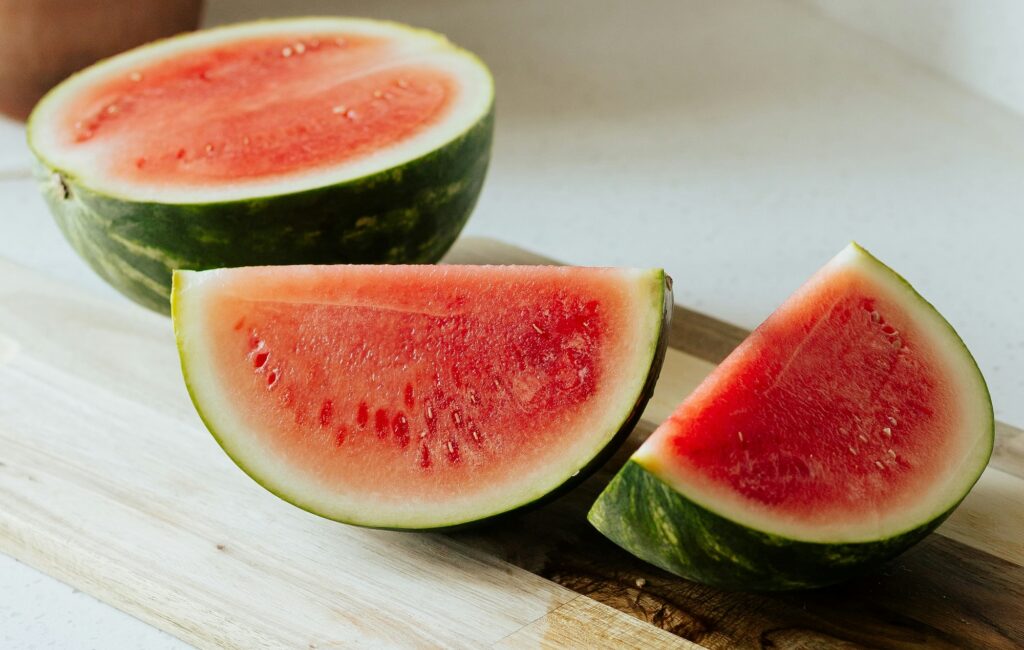
- Eat your water: build meals around high-water-content foods—watermelon, cucumber, zucchini, tomatoes, berries and leafy greens
- Temperature tricks: cold water is absorbed faster and most people drink more of it. Infused waters (cucumber-mint, lemon-ginger, berry-basil) make hydration more appealing
- Herbal iced teas: hibiscus, rooibos, mint, and chamomile teas are caffeine-free and count fully toward daily totals. Hibiscus in particular has been shown to have blood-pressure-lowering effects
- Habit stacking: link water consumption to existing habits—one glass before each meal, one glass at every coffee refill, one glass every time you sit down to work
- Visual accountability: large insulated water bottles make it easy to track intake; rubber bands moved from one end to the other with each fill serve as a simple visual counter
- Avoid over-relying on sports drinks: most commercial sports drinks (Gatorade, Powerade) contain substantial amounts of sugar and artificial dyes. For everyday hydration, they’re not needed. For intense athletic activity exceeding 90 minutes, a lower-sugar electrolyte option is better
- Evening wind-down hydration: many people are in a deficit by end of day. A glass of water with a pinch of sea salt before bed can help maintain overnight hydration balance
Hydration Quick-Reference Summary
| FOR EVERYONE Baseline: 0.5–0.6 ounces per pound of body weight daily Indicator: pale yellow urine, 4–7 times daily Summer add-on: +8–16 ounces on hot days Key habit: 16 ounces of water upon waking, before coffee |
| FOR TEEN ATHLETES Night before: 16–20 ounces of water Pre-activity (2 hrs before): 16–20 ounces water or low-sugar electrolyte drink During activity: 6–8 ounces every 15–20 minutes Post-activity: 16–24 ounces per pound lost during exercise Electrolytes are essential—not optional—for any activity >60 min in heat |
| FOR MIDLIFE ADULTS Don’t rely on thirst — it’s not a reliable signal after 40 Electrolytes matter more, not less, during midlife Hydration supports skin, metabolism, hormonal function and energy Front-load the day: most of your water should be consumed before 4pm Check medications: several common midlife prescriptions are dehydrating |
PLEASE SHARE: If you enjoyed this post, please share. If you have any comments or questions, please let leave below.



0 Comments